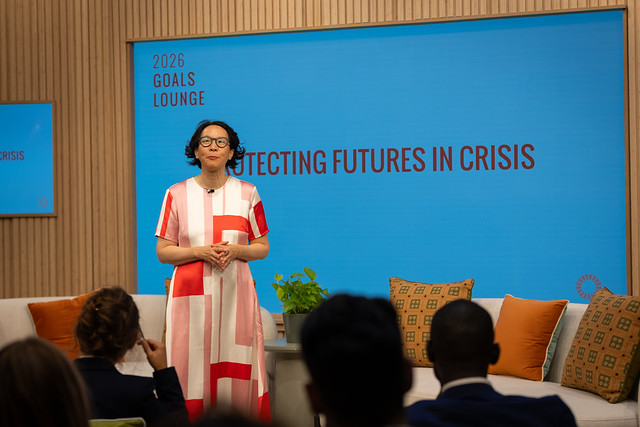
The Hidden Crisis Behind Humanitarian Crises


Humanitarian crises are affecting far more than immediate survival. They are disrupting education, straining mental health and placing enormous pressure on the systems and people working to support communities. Speaking at Goals Lounge, Tom Fletcher, United Nations Under-Secretary-General for Humanitarian Affairs and Emergency Relief Coordinator, highlighted the growing challenge facing aid workers, warning that humanitarian responders themselves are reaching a breaking point. As he noted, if those delivering assistance are exhausted and unsupported, the entire response effort is at risk.
The discussion emphasized that effective humanitarian action depends on stronger collaboration and local leadership. Musician and War Child advocate Marcus Mumford called for organizations to work together and create space for communities to lead solutions, recognizing that local actors are often best positioned to respond to crises and build resilience.

Education and mental health emerged as inseparable priorities. Sidsel Marie Kristensen, CEO of the LEGO Foundation, stressed that children cannot fully benefit from education without the mental well-being needed to learn, underscoring the importance of holistic support in emergency settings.

The conversation also focused on the wellbeing of frontline workers. Maria Jamal of Humanity Crew challenged the stigma around seeking help, emphasizing that asking for mental health support is a sign of responsibility rather than weakness. Supporting responders, she argued, is essential to sustaining humanitarian action.
From international commitments to community-based initiatives, the overarching message was clear: lasting impact requires investing in people at every level. Protecting communities, strengthening education, prioritizing mental health and caring for frontline responders are all part of building a more resilient and effective humanitarian response.
Watch the conversation on UN Web TV.
Photo gallery
24 Sept 2026 - Protecting Futures in Crisis: Building resilience through Education and Mental Health in Humanitarian Settings